Track 6 of The Miracle of Levitation was performed by 7000 Dying Rats. Four of those 7000 Dying Rats were previously in the short-lived Detroit band Phünhögg. They released Five Foot Moustache in 1993 on 44 Caliber Records.
If you go by just this record, Phünhögg sounds like a gluey collage of all the successful Alternative bands of the era. They play with a foundation of metal chord progressions, guttural screams and the hoarse vocals familiar to grunge. There's also verses of rap rock on "Fumunduh," speedy speak-singing on the floor thumping "Meat," and a parodic southern drawl on "Manrammer." Each song fluctuates somewhere on the metal spectrum leaning ultimately towards grunge. Despite its members-only lyrical content, none of the songs really fit together. Each one sounds like a coffee-stained cock and balls margin drawing of a napkin draft reject from a different Alternative hitmaker. Even aided with the chugging propulsion of their chosen genre, Phünhögg is only cohesive in each songs' sluggishness, mired in a sound that is not their own. Outside of Five Foot Moustache, Phünhögg knows itself as a harsh metal band and sound a lot livelier and more fun as a result.
Here is Phünhögg's discography:
100% Polyester (1987 demo by The Herb Tarlick's)
Hummingbird (1988 EP by The Herb Tarlick's)
Fishbowl (1990 single by Green Wall)
Fishbowl (1990 single by Sound Corporation)
Utica (1991 single)
Phünhögg (1992 tape)
Five Foot Moustache
Note: There are certainly more underground releases from the various band members that led up to Phünhögg. There are probably even more Phünhögg recordings, but that's a deep dive for another blogger.
On The Miracle of Levitation, Xome's "Children Recognizing Meat as a Main Dish" is Track 4. Although he had recorded his own music (not the right word) for years already, his first live performances and releases came while he lived in Japan (contemporaneous to Brent Gutzeit and Michael Hartman's short stays there.) Xome released his debut album Blind Frenchies and Pork in 1995 on his own label Negatron Heavy Industries.
Xome, aka Bob Scott, is a harsh noise project. From my understanding of the history of Xome's gigs via his website, his harsh noise is an act of daring overexposure, of smashing taboos and even tips into misdemeanor lawbreaking. A great gig leaves audiences with a night of memorable audio/visual trauma. Unlike the live instrumentation and junk sounds of other improvisational noise genres, harsh noise forgoes them for digital equipment made to layer static, distortion and feedback. The genre hasn't much use for rhythm, tempo or other traditional musical qualities in favor of...well, mostly just texture. The result is a heavy dose of abrasive static and ear-piercing tones. Like on a TV, the static is random and patternless and painful and damaging if you spend too much time with it. But it's still possible to get lost in it and hear things from the other side: from Bob Scott to, say, Carol Anne's ears.
So what can you hear? Depends on the recording. "Calcutta" starts with squealing tones that waver in amplitude and seem to change their texture as they ascend or descend in pitch travelling through the various machines. All the while, Xome layers in a contrasting ambient recording of bells, strung together and shattering in an otherworldly way. A consistent quality of these walls of static and feedback tones and distorted recordings that leave your ears ringing and send your dog to the other room is that they sound small, as if Xome were taking the most sensitive microphone in the world and holding it, not to his equipment, but to their wires to record the miniature traffic of atoms and electrons. It's the sound of the electrical blown up to a level of disturbing power.
Specificities, though, seem almost beyond the point. Xome prefers the live setting. For harsh noise, in all its will to disturb listeners and push boundaries, is a troll's genre. The improvisation is as much a reaction to the audience as what noise is being made. The performances, like the reactions, are physical, and there might not be anything more satisfying to the harsh noise maker than the physical reaction of the audience walking out the door.
Here is the discography surrounding Xome's debut album:
face 23 (1994 tape)
split (1995 split tape with Stimbox)
Clip Off (1995 compilation song on The Sound of Samsara)
Blind Frenchies and Pork
Children Recognizing Meat a Main Dish (1995 compilation song on The Miracle of Levitation)
The other band to precursor U.S. Maple (Track 3 from The Miracle of Levitation) is the indie band Diaper. Diaper released their only album The Brown Suit in 1994 on Weed Records.
Diaper is a throwaway band name. The band itself was probably intended to be just that: a little project pulled together by friends and a will to just "make a record" in your early 20s. Drummer Pat Samson and guitarist Todd Rittman had already played together with The Mercury Players and would later form U.S. Maple. Rittman recruited high school friend and cellist Kera Schaley (previously of dOUBT) to round out the trio. The recording was rushed, the release push nearly non-existent and the "album-release tour" a couple of concerts in Chicago and Athens. As presaged by their name, the album fell into obscurity.
Despite this, the three together sound cohesive and well-practiced. They embrace the minimal spareness of their band's makeup and recording space: a barn, mostly. They create a very direct record, as a result, without much semblance of production. The guitar is simultaneously ominous and glittering; the cello welcoming and fragile. The songs, like a lot of early 90s indie songs, find themselves in love with dissonance and minor chords and sound more like variations on a musical theme. Even with the band members' respective musicianship, their songs can turn plodding in these variations and the cello lilts towards the lullaby. It's only when Schaley or Rittman embrace the noisier potential of their instruments, like the concluding breakdown on the instrumental "Off" or the quite funny opening strums on "J Mascis Is God," that Diaper keeps the album from becoming comatose. The lyrics match the sonic mood, sung alternatively by Schaley and Rittman. They're dark, brooding and sarcastic; or so I've read. I couldn't make out half the lines as the vocals are much too low in the mix. In the end, there's not enough ambition or inspiration to elevate the album beyond a local curio, but the band never really intended it to be anything but that—and it's certainly more valuable than just a diaper.
All information here about Diaper comes from Kera Schaley's point of view through a (much needed) interview conducted in 2010 by Evan LeVine writing for his blog Swan Fungus. In his article, he's uploaded a couple songs if you want an idea of what the band sounds like.
Here is the discography for Diaper:
Box of Headaches (compilation album of unreleased recordings by dOUBT)
Hollywood or Bust (1992 single by The Mercury Players)
Don't Run, It's Your Dreamgirl (1992 EP by The Mercury Players)
The Miracle of Levitation brought together assorted noise outfits from both the Midwest and Tokyo. The next sequence of Tour stops will hit as many of the bands and artists (or related groups) featured on the compilation as possible. Starting stateside, track 3: U.S. Maple...but not actually. U.S. Maple was a convergence of two separate bands. The first, and the first we'll be covering, is Shorty—an early 90s, Chicago-area noise rock band. Shorty released their only LP Thumb Days in 1993 on the German label Gasoline Boost Records.
Al Johnson sings out of the side of his face. Not "sings" really, he screams. He contorts his mouth in a Two-Face fashioned and screams sidelong. He holds the microphone not up to his lip distortion but further askew pushed against his cheek and pushing harder when the notes shift slightly deeper. Johnson's screams come out of the greatest possible vocal restriction, full throated but strangled. This unique delivery mutes Johnson's lyrics and limits his range as he rends each song with snarls and indistinguishable provocations. He's Shorty's frontman and showman but also the final touch to a calibrated sound. At the foundation of this calibration are Luke Frantom on bass and Todd Lamparelli on drums. Frantom in particular plays a near-metronomic (and very baggy) bass that fastidiously loops his lines. He and Lamparelli deftly control the time-signature changes that adorn the compositions on Thumb Days. The two of them create a breakneck but calculated drive with a level of darkness that matches the metal roots of the nascent Alternative sound.
Mark Shippy, however, makes Shorty a noise rock band and a very good one. Shippy's style mixes traditional chord progressions with abrasive textures and a deft control of feedback. Within his style, he can line up both a song's central hook as well its frenetic solo. He can both groove with the drum and bass and also match Al Johnson rip for rip. On an album where each song outputs the same speed and energy, Mark Shippy separates each one with his guitar just as, with his guitar, he ties the band together.
With Brent Gutzeit and Michael Hartman's return form Japan, they worked with Thomas Deater to gather recordings from their friends in both the Midwest and Tokyo improvised noise scenes. The resulting compilation The Miracle of Levitation came outin 1995 on Gentle Giant Records.
The album features established titans of the genre like Otomo Yoshihide and Jim O'Rourke alongside newer acts inspired by them. For many of the Japanese acts on the track list, this would constitute their first "US release." Noise rock bands lead into ambient synths lead into textural guitar solos: no track sounds the same, and the album shows off the breadth of what improvised music can sound like.
Here is the discography around Gentle Giant Records's compilation album:
After graduation, Michael Hartman found himself pulled to Tokyo in the wake of his friends, moving there and enjoying the tail end of Japan's nineties "bubble economy." The experimental noise scene in Tokyo was friendly and open and inviting to collaboration, and Michael and Brent Gutzeit soon ended up performing with some of the transcendent names of the Tokyo scene. Michael was also invited to join the improvised music group Cult Junk Cafe. The band released their debut tape Cult Junk Cafe in 1995 on Gentle Giant Records.
Cult Junk Cafe is another improvisational band playing under the influence of John Zorn's Cobra, a musical composition that randomly prompts a band to follow musical instructions via cue cards. Like Michael and Brent's group Pencilneck, Cafe follows a simplified version of Cobra where any performer could cue a change in musical direction through just hand gestures. The tape is made up of live performances made throughout early 1995.
Like any band, Cult Junk Cafe is defined by its members and instruments: Michael Hartman on drums, Yoshigami Kyota and Otani Yasuhiro on guitars, Sakamoto Kazutaku on synthesizer and founder Tsunoda Tsuguto on turntables/sampler. Brent Gutzeit (bass) and Agata (guitar) guest on certain sessions. The earliest tracks, recorded with Agata and Brent on February 3, 1995, are pure chaos from start to finish. Every instrument plays at once, seemingly all on different pages of the same book, and actively disassembling any musical idea that might cohere. The only voice that really makes itself heard over the others in these tracks is Agata's unmistakable guitar (but that might just come from familiarity.)
After two months (recording on April 3,) the group favors more cinematic and less abrasive improvisations. The songs from this set also seem to follow one musical "director." Sakamoto's synthesizers are the foundation for "Open the Gates", a more environmental sonic piece that sounds apiece with the science fiction cityscapes of the 1980s. The excellent "Improvisation (4395)" follows Tsunoda's squirrelly turntables that establish an elastic sound that coils up and releases energy throughout. In both cases, the lead guitar matches the energy of the song's "leader" to create a more cohesive and pointed template for everyone to play off of.
After two more months on May 30, Cult Junk's tracks favor a slower start. Any music, sound, concept and comedy comes less from a clash of personalities (as they did when the band first started recording) than a synthesis of them. On the tape's sprawling tracks like "Improvisation (53095)" or "Theme from the Action Theme Song", the compositions are a journey of wandering musical paths. Any member could suddenly guide the band out of one sonic direction to follow and react to their own musical leads. These shifts can be smooth or jarring but keep the tracks moving and unpredictable. Occasionally, these shifts fall flat when the rest of the band doesn't quite know what to do sonically with an idea another member is introducing. It's an easy enough trap to get out of, though, given the conceit.
According to Hartman, the hand gestures used by the band to cue a shift in musical direction became less necessary over time as improvisation improved. And it's clear from listening to this tape, a compilation of three live sets across a couple of months, that improvement goes hand in hand with trying out different ways to improvise. Of course, there is no right or wrong way about it...just what works best for any given band on any given day.
Note: Special thanks to Brent Gutzeit and Michael Hartman for answering my questions about their music and their time in Japan.
Here is the discography surrounding Cult Junk Cafe's debut tape:
Cult Junk Cafe
The Jackson Stomp (1995 compilation song from The Miracle of Levitation)
On scholarship to study under sculptor Ryoji Koie, Brent Gutzeit moved to Japan and eventually landed in Tokyo where he fell in with the city's experimental music scene. While living there, he formed a band with fellow Kalamazoo expatriate Michael Hartman. TV Pow released its debut tape TV Pow in 1995 on Gentle Giant Records.
The tape starts with a field recording at a Japanese train station: an announcement jingle, a Japanese voice and the train approaching, braking and blowing out the recording equipment. The sheer volume of sound is more than the equipment can handle. This embrace of compression to create and manipulate noise is the through line of an otherwise unfocused tape. The tape is a collection of experiments, mundane sounds, live noise rock, and homage. All of it the lo-est of fi-s. Simply, it is a combination of "trying things out" and "fucking around," recording with whatever's handy.
"piano song" is the tape at its most cerebral: a two-player variation on John Cage's "Water Walk" where the ordinary objects are more percussive and rhythmic, and the prepared piano is afforded an extended solo. The other end of the musical spectrum is in "this close" where the listener gets an earful of foreplay from a microphone too close to hear anything. The flirtatious intention is clear if unintelligible and the subsequent play is simulated by instruments.
"kitchen scene" highlights the clinks and clunks of bottles and pans moving about a kitchen. Following these cues on the rest of the record (outside of the few live recordings,) the percussion arrives by any means but drums. Thunder sheets, breaking glass, or any household object that could be thumped does the trick. The guitar, meanwhile, meanders its way into rhythms and songs or breaks out into the limits of its own abrasiveness. Finally, "i have a special camera" is one of many field recordings as skits strewn about the tape. It captures the youthful energy, freedom and drunken transgression of Americans walking the streets of Tokyo at night: yelling out an inside joke that is politely dismissed.
The tape is nothing serious and not to be taken seriously. Its modus is the youthful dawning of the ever-expanding scope of whatever music can be, and its result is inevitably sophomoric. Also inevitably from people who can see so far so young, TV Pow will only come to know itself better and grow from here.
Note: Special thanks to Brent Gutzeit for answering my questions about his time in Japan and providing a digital copy of the TV Pow tape.
Here is the discography surrounding TV Pow's debut tape:
TV Pow
Big Fat Fuckin Zero (1995 track from The Miracle of Levitation compilation album)
While Brent Gutzeit was an active member of multiple bands (including Pencilneck and Liminal,) he also recorded and released music under the moniker Wheaton Research Labs—shortened soon after to just Wheaton Research. The solo project, which started in 1992, released its debut tape Sean Wood Is a Genius in 1995 on Gentle Giant Records.
According to Brent, Wheaton Research was based on experimentation with "recycled cassettes." To paraphrase his process, he would play tapes through his stereo and record them on his boombox then repeat the relay x number of times. The result would take the sounds from the original tapes, compress them and thus warp and distort them—all while accumulating layers of ambient noise.
Sean Wood is not currently available to break down, but the contemporaneous Davison 1995gives an idea of the kind of experiments Wheaton Research was concocting. The pre-processed tapes could hold any type of sonic material including field recordings, room tone, live performances, or singular sounds such as a motor, a fan or a bass drone. And there doesn't seem to be an arbitrary number of times each tape might be re-recorded. This results in a variety of levels of distortion that can range from simple crackle that fills in the hum of a room to speed changes that can warp a drone into something more melodic. Every track is at the same time familiar yet off-putting; taking recognizable sonic imagery and warping the image into having an unfamiliar character. What new character that might be is entirely on the listener.
Also, I recommend checking out the video below from Brent Gutzeit's documentary/live footage/musical compilation project The Miracle of Re-Creation released circa 1997.
Here is the discography surrounding Wheaton Research Labs's debut tape:
The band names might change but the lineups become familiar across the early releases by Gentle Giant. From Liminal, the adjacent rock band Pencilneck held over members Thomas Deater, Brent Gutzeit and Todd Carter while adding Rob Stimpson from the Kalamazoo hard rock band Fatsack and local studio engineer Mike Schuur. Pencilneck released their tape Ohranger in 1994 on Gentle Giant Records.
Despite the familiar lineup, Pencilneck conceives an entirely different mode of noise than Liminal's. Brent Gutzeit's "sound environments" make way for an only slightly more traditional handmade 18-string bass. Becky Cooper and her flute make only a single track's guest appearance. Those two elements are the foundation of Temple Music's meditative ambience, so a new band name reflects the sonic change. Without the tumbling cacophonies from Gutzeit's creations and Cooper's ethereal flute, gone also is the improvisational structure that held Liminal's compositions together. Now with Pencilneck, the noise seems less arbitrary and the fellow players feel less like adornment. Pencilneck, instead, explores their collaborative potential via a sort of free jazz fusion.
On the tape's opener "Suberbole," Pencilneck sets up a traditional structure where the guitars and bass and saxophone (Mike Shuur) explore the textural walls of sound their instruments can create. That is then all held together rhythmically by the funk-style drumming. The song plays like a playful riff on the alternative rock sounds of the era, and if the rest of the album stayed the same, would've made for a clever contemporary music commentary. But 23 other songs on Ohranger, go in 23 other directions. Punk, sludge, metal, grunge and even anti-folk all become occasional ingredients and thus fodder for Pencilneck, but it's all byproduct to what the band is actually doing: playing a game.
According to Brent Gutzeit, Pencilneck "was a rock band...that played game structured improvised pieces, similar to John Zorn's Cobra game. We would use hand gestures to signal changes in the song as we played." Besides the musicians, nothing stays the same from song to song. Each composition is effectively a randomized creation through a recombination of players, time signatures, or any other musical element. The results are myriad: "wannabe" has the closest structure to an avant-garde jazz number; "clothed city" traffics multiple time signatures and rhythms for some sonic congestion; "sock" is a devolving rock song that miraculous reforms through the stabilizing force of the drums and bass; and "pillow talk" hews closest, with its metronomic melody, to a piece Liminal might produce.
The album as a whole is a trove of musical potential: what music traditionally doesn't play but could and does here. It challenges traditional musical aesthetics and expectations and keeps the mind reeling trying to keep up with all you've never heard before...even if at an hour and twenty minutes, it becomes exhausting.
Special thanks again to Brent Gutzeit for sharing a copy of Ohranger and for answering my questions about Pencilneck.
Here is the discography surrounding Pencilneck's tape:
The trio of Thomas Deater, Brent Gutzeit and Blaine Townsend that played together on the Linkage track "Ugly Bell Suite" performed under the moniker Muzak for Llamas while at Western Michigan University. The band, formed to highlight the sculptural instruments made by Gutzeit, would expand, shift lineups and become Liminal. Liminal released a cassette No. 1 (Construction) in 1993on Deater's Gentle Giant Records.
Unfortunately, I couldn't find a copy of this cassette nor any of the music thereon. But in 1999, Gutzeit's own label BOXmedia did release Temple Music, a 1993 Liminal live performance held in WMU's Rotunda Gallery. It helps fill in what the cassette might have sounded like keeping in mind the band's fluid lineups. On Temple Music, the nucleus is, of course, Gutzeit's instruments. They are uniquely percussive—in ways only handmade instruments can be—outside of any classical and familiar resonances. His instruments are also sculpted with the live space in mind and can sound cavernous as the tones emitted tumble and layer, reverberating in the room and against themselves. The result is an entropic ambience whose amplitudes level anywhere between balm and bombast.
Becky Cooper's flute, playing Eastern-influenced tonalities, is the other omnipresent sound and only melodic ingredient on the recording. She adds a meditative layer that elevates the music to something more mystical. Thomas Deater (guitar,) Michael Hartman (percussion,) Josh Remy (synthesizer) and Todd Carter (sampler) further accent the soundscape and bring structure to the, only somewhat, controllable chaos at the music's center. Together, the improvisations build a space greater and more strange than a gallery; akin to a temple, yes, but also revealing of the fantastic therein: the liminal, you might say.
Temple Music is available for purchase here. Special thanks to Brent Gutzeit for his generosity in sharing these albums and answering my questions.
Here is the approximate discography surrounding Liminal's cassette:
No. 1 (Construction)
Temple Music (1999 release of a 1993 live performance)
04.16.94.21.24.20 (1995 track from The Miracle of Levitation compilation)
Kalamazoo 04.16.94 (1997 track from The Miracle of Re-Creation compilation)
In the late nineties, Bill Groot and Brent Gutzeit founded BOXmedia and focused on releasing albums from Chicago's experimental and improv music scenes. Gutzeit had been a presence in the scene for a few years but started performing in Kalamazoo as a student at Western Michigan, playing with his college friend Thomas Deater. Thomas Deater self-released his debut album Linkage in 1992 on his own Gentle Giant Records.
The first three songs each uniquely set the tone for the cassette. The first "Violins" is Deater on guitar that's then run through tape manipulation (speed changes, reversing) to evoke the sonic feel of the title instrument. The second,"Ugly Bell Suite," is a live performance with Blaine Townsend also on guitar and Gutzeit on instruments of his own making (credited as "woodstrings" and "metalstrings" by Deater.) The song's title also evokes another instrument to the same effect, achieved this time through Gutzeit's arhythmic percussion and controlled noise. The third song, "Linkage," is a post-rock improvisation with another guitarist Kirk Decker. All three songs produce a common ambient sound despite the differences in means, and all three means of production end up being layered to different effects on the rest of the album in addition to finding a greater structure through more rhythmic foundations.
The album is available for purchase here. Special thanks to Brent Gutzeit for his generosity in sharing these albums and answering my questions.
Here is the discography surrounding Thomas Deater's debut album:
Josh Abrams juggled playing bass for The Roots in Philly—busking, doing open mics, recording, the like—with school at Northwestern. After graduation, he would stay in Chicago where he became a notable presence in both the jazz and improvised music scenes. After Organix, his next full album recording was Town and Countrywith his band of the same name. The independent music label BOXmedia released the album in 1998.
Town and Country describe their sound as "back porch minimalism." Their use of "minimalism" places them in the modern classical tradition. It's audible in how they construct their songs through a layering of drones and melodic repetition. The "back porch" implies a folk approach to the classical. It starts with the primary instrument choices: two bass (played by Josh Abrams and Liz Payne,) guitar (played by Ben Vida) and especially the harmonium (played by Jim Dowling.) The "back porch" also brings into account the band's improvisation, unrestricted by rigid sheet music, and the embrace of imperfection. The band's improvisations are slight and can be as simple as one of the drones shifting notes or as rare as the introduction of an unexpected melody amidst the layers—all in search of new sonic combinations. And error, too, can lead to new paths.
Of course, drone music is not for most people, but the "back porch" quality is an invitation to come and go as one likes or even join in. After all, the "back porch" is also a space as can be the music. This music has a flexibility to it. It can occupy a space but also warp that space or bend to it. Because the music is ruled by its minimalism, it becomes a deep exploration of the qualities of each instrument, their breath and texture and their amplitude. The musical space these explorations create can be loose enough to welcome natural sounds (especially if played where their descriptor implies) or dense enough to drown all thought in. The distance traveled from one to the other is the tension the music thrives on.
I think I'd like to listen this album again, outside, on a rainy day.
Here is the discography surrounding Town and Country's debut album:
Sonance Quarry (1997 compilation songs by Odradek and Belokwa String Ensemble)
Town and Country
Town and Country - February 5, 1999 BOXmedia Festival
The best and most tasteful decision Jimmy Fallon ever made was hiring The Roots to be his Tonight Show band. Considering the history of music on the Tonight Show, the bands—meant to entertain and hype audiences leading up to shoots and during breaks—have all been versatile with popular song. Only Branford Marsalis, who played what he wanted, bucked the job description. Kevin Eubanks and his band brought rock, R&B and pop into the show's repertoire, and The Roots could do all that and bring in, naturally, Hip Hop. Even before hiring them, Jimmy envisioned The Roots playing a bigger role than just as a hired audience to laugh at his jokes. In a call back to Carson, Jimmy features their skills regularly in sketches, and games and musical routines. The best thing about Jimmy's tenure is his palpable camaraderie with The Roots, a relationship not prominent between host and band since Carson and Doc. "Retiring" to the regular job for Tonight came after nearly twenty years of albums and hard touring. The Roots self-released their debut album Organix in 1993.
At first, The Roots found it difficult to get signed. Not gaining any career traction in their native Philadelphia, they moved to the UK and toured Europe and had to self-produce their debut. As such, Organix lacks studio polish. Instead, The Roots were still finding their identity and sought to chronicle that growth on record. Ahmir "?uestlove" Thompson on drums and Josh "Rubberband" Abrams/Leonard "Hub" Hubbard on bass are the album's beat and melody in an radical embrace of stark minimalism that has a flexible affinity with jazz, funk and R&B rhythms. Guitar and keyboards are only occasional touches to get the listener moving a bit. Overtop is almost always Tariq "Black Thought" Trotter who delivers breathless rhymes as the primary emcee. He can fall into similar rhythms and rhyme schemes from song to song but delivers with undeniable power and cleverness.
In this freeform chronicling of artistic growth, each song owes a lot to The Roots's Hip Hop influences with the jazz-attuned Tribe being undeniable. They try a few times to replicate their own versions of earlier alternative rap hits like "Can I Kick It?" or De La Soul's "Buddy." Songs like "Grits" and "Pass the Popcorn" allow lyrical play with a rather undefined metaphor but don't have the same ear for a single. Despite the spare instrumentation, the rhythm section already has a deep well of musical references to pull from, incorporating them into songs in a manner halfway between sampling and jazz quotations, and Black Thought is just as willing to rap as to try slam poetry or scat. The experimentation can be just as silly as serious like with a bass line call back to the "Inspector Gadget" theme song or just a 14 minute-long, "Longest Ever," posse cut featuring the Foreign Objects, The Roots's attempt to create a hip hop collective akin to the Native Tongues (Tribe, De La, Jungle Brothers,...) "Good Music" is the album's musical and lyrical peak opening with a nod to underground radio world-building, incorporating storytelling and band lore, using a clever echo-like round in the chorus and breaking down into a fun time.
I don't think I really needed to say all this because Black Thought says it all in "Leonard I-V":
And I speak up loud so you can hear me yo
Is it a Tribe Called Quest? Is it the JBs?
We're cool like that, but yo we're not the DBs
It's the group, The Roots, with the organic rap style
Plus the groove from the rhythmic rhyme file
Umm...I'm a big fan of the Soul
But I'm trying to get this Roots shit in control
So I hate when people say
"Umm—you remind of me De La Soul,"
'Cause I got a soul of my own, and umm
Yo, The Roots are taking big steps and
You can listen as we progress in
Sometimes I might come to teach a lesson
Other Times it's with a crazy question like...
Yo, whatever happened to Leonard Parts One to Five?
The result is a testament to Thompson and Trotter's pursuit of a destiny written in song. Shaggy, fun, full of potential, devoted and indebted: The Roots are trying a little bit of everything to start. They don't know quite who they are yet but they know where to go to find out and we, the listeners, get to witness the first steps.
Thus ends the year-long-plus journey through the audio history of The Tonight Show. Thank God. Wouldn't have done it in hindsight, but I...really wanted to cover The Roots.
Here is the discography surrounding The Roots's debut album:
Organix
"Pass the Popcorn" by The Roots
"Essawhamah?" by The Roots
Questlove Remebers When Jimmy Won The Roots Over
Know Your Roots with Questlove and Tariq "Black Thought" Trotter
Jimmy Fallon, The Who & The Roots Sing "Won't Get Fooled Again" (Classroom Instruments)
The only person to really benefit from the Tonight Show's Leno/Conan/Leno hosting shuffle was Jimmy Fallon. After a six-year stint as one of SNL's most popular cast members and a misguided turn as a film star, Jimmy Fallon fell into Conan's open seat on Late Night and thus became the natural heir to the Tonight Show desk. (Unlike for Letterman and Conan, Fallon's Late Night tenure felt more like on the job training for future, bigger stakes.) Leno lasted four more years before retiring. Jimmy took over as host of The Tonight Show on February 17, 2014 and has been behind the desk since. Before he was on TV, Jimmy Fallon was a stand up comic. While he was on TV, he released his first comedy album The Bathroom Wall in 2002 on DreamWorks Records.
Jimmy Fallon's hefty bag of impressions impressed Lorne Michaels enough to hire him for SNL where he was a valuable utility player: good for celebrity lampoons and silly-voiced bits. His bag also includes musical impressions; he can break out a guitar and a convincing Dave Matthews yowl. So, the album is naturally designed around this skillset—however far that will carry—and is made up half of musical genre parodies and half of his pre-SNL stand up material. The anchoring routine is also divided into halves. The first half is a run of impressions of celebrities vying to be the spokesman for Troll Productions Inc, makers of Troll Dolls. The second is a run of musical parodies of bands vying to write a jingle for Troll Productions Inc. Robin Williams, Jerry Seinfeld, Gilbert Gottfried, then U2, the 4 Non Blondes, R.E.M. et al switch in at breakneck speed, inspiring the awe of recognition. and leave before any one voice or song gets stale and before the audience catches on that the bit is stupid and bereft of actual jokes.
Like any musical parody album, the songs jump through a variety of genres and "parodies" them by contrasting expected lyrical content with actual lyrical content. What if a punk band sang about a snowball fight? What if the Beastie Boys couldn't hoop? What if Prince was an "Idiot Boyfriend"? The characters in these songs are all the same pathetic white boys and the jokes detail exactly how pathetic. Mark Ronson and Justin Stanley handle the production to at least give the songs a professional sheen that helps sell the parodies. But they weren't in the room for the worst musical bit on the album, the closer. A live bit reverse engineered to show off Jimmy's ability to sing off key...I mean, sing popular songs in a way that is vaguely familiar to the originals. The conceit: you can play MC Hammer's "Hammertime" under any 80s pop song. Sure, you can do that, but it doesn't work. It's also not a joke. Good crowd work, I guess.
Back to the stand up material because Jimmy Fallon is more than just impressions though impressions sneak in anyway (see the unfortunate "Chris Rock Was My RA" bit.) The material is all college jokes—roommates, community showers, mini fridges, etc.—and probably been the filler to his routine for nearly ten years at this point (and definitely five years since he was performing the set a year before joining SNL.) But college jokes are timeless especially when delivered to college audiences. On the recording, the college kids are slightly drunk and very generous and unwittingly give voice to the flaw running through Jimmy's whole routine. Impressions and jokes are greeted alike with cheers, not laughs. But Jimmy's a nice guy and the audience wants to have a good time with him and wants him to succeed. So does Lorne, so do NBC executives, and so do his agents. Turns out, doing only one thing well can take you pretty far.
Here is the discography surrounding Jimmy Fallon's debut album:
The Concert for New York City (To Benefit the Robin Hood Relief Fund) (2001 compilation song)
MTV TRL Christmas (2001 compilation song)
The Bathroom Wall
Hammertime (2002 promo single)
Idiot Boyfriend (2002 promo single)
Selections from The Bathroom Wall (2002 EP)
Jimmy Fallon Stand Up
Jimmy Fallon's Late Night Debut
Jimmy Fallon Hosting the 2002 MTV VMAs
Jimmy Fallon Interview Before Taking Over Late Night
Jimmy Fallon's Tonight Show Debut Monologue (delivered as if it's his last)
So, Jay Leno returned to The Tonight Show, as did Kevin Eubanks but only for a couple of months. After the drama surrounding the Tonight Show shuffle and a desire to spend more time with family, Kevin stepped down as Jay's bandleader. Industry veteran Rickey Minor and his TV Band (hired away from their gig as the American Idol band) took the stage in May 2010. Minor brought with him his television professionalism and complemented Jay by playing energetic pop songs and classics that would reinvigorate the audience during breaks in the recording. He started his career as a bassist, playing in groups and in sessions, and notably joined Whitney Houston's band before becoming her musical director. That job title would become his career as he worked with artists across the pop landscape and on shows like American Idol and The Oscars. In the middle of working for Whitney, he recorded with Jazz Express on their debut album The Songs of Diana Ross released in 1992 by the Japanese label Sound Design Records.
There's not much information out there about Jazz Express—probably because there's not much history. They were a studio band that recorded a series of smooth jazz albums with each album focusing on covering hits by a particular artist. They released five albums in 1992 alone and the "first" release I chose—I couldn't find exact release dates—is only based on the earliest catalogue number (SDCH-1016.) Rather than a band with a vision, Jazz Express looks like and sounds like and jazzes like a session job.
The first three songs are dominated by the soothing sax sounds of Michael Paulo. His saxophone's velvet texture is pillowed with organ chords, shimmering cymbals and a touch of chimes in the opening seconds of "When You Tell Me That You Love Me" and creates that cozy sound perfect for when you're contemplating the wonderful end to a romantic date (in the 80s,) enjoying a bubblebath surrounded by scented candles (in a cheeky Old Spice commercial,) or on hold waiting for your doggy daycare's customer service representative (still.) But then the album of Diana Ross covers drops a couple players favoring a smaller combo. Michael Paulo isn't on the rest of the album and neither is guitarist Buzzy Feiten. The main players left are Rickey Minor, drummer Ricky Lawson and pianist Neil Larsen. Neil Larsen punches up the remaining songs by speeding up the tempo, introducing tension, and allowing the two Rick(e)y's larger roles including a nifty drum solo on "Stop! In the Name of Love" and more melodic and prominent lines from Minor. These tracks veer away from the programmed smooth jazz, though still smooth and perfect for background at a convenience store, to a style with a little more forward motion...though not quite enough to be invigorating.
Here is the discography surrounding Jazz Express's debut album:
The Songs of Diana Ross
The Tonight Show Theme
Kevin Eubanks Discusses His Decision to Leave The Tonight Show
"Be Yourself...Unless" by Rob Kutner and the Levinson Brothers featuring Steven Page
When Conan O'Brien shifted to Tonight, he hired veteran Daily Show writer Rob Kutner. As a writer, Kutner extended his output beyond just monologues. He's written books, web series, panel comics, graphic novels and...comedy albums. Teaming up with frequent collaborators the Levinson Brothers (Stephen and Joel Moss) and recruiting a cast of famous friends, he released It's OK To...Do Stuff in 2012 through Rooftop Comedy Productions.
The short album was recorded and released to coincide with the 40th Anniversary of Marlo Thomas (and Friends') Free to Be...You and Me. A seminal children's album, TV Special and book, Thomas brought together musicians, actors and comedians to record a series of songs, sketches, poems and stories that challenged typical gender norms in both an earnest and subversively comic fashion. Kutner and the Levinsons couldn't just write a "comedy" version of Free to Be because it was already funny, and they didn't want to simply lampoon Thomas's feminist efforts. Instead, they landed on a formula to poke fun at the beloved classic by writing songs that were a bit too adult to have made the original's cut.
Joel Moss Levinson handles the music and the comedy is a team effort. Their songs speak to those who grew up on Thomas's lessons but then, like on "Divorce Makes a Family Twice as Big," got a dose of reality and a bit of cynicism from a world still trying to live up to her ideals. "Divorce" is the comic stand-out on a listenable Side A, but despite base material ripe for satire, Kutner and the Levinsons run out of steam quickly and close out the album with some comic clunkers, especially the closing "Everyone's Equally" that hasn't faith in the people of the world nor any sense of comic rhythm.
The wrangled stars that bring the album to life include musicians Steven Page of The Barenaked Ladies, Jane Wiedlen of The Go-Go's and comedians Samantha Bee, Wyatt Cenac, and James Urbaniak among many other of Rob Kutner's co-workers and friends. Unfortunately, they lack the charisma to better sell the material. Not like there was enough to work with, most of the big names only get a single line.
The album is unfortunately too song-forward and doesn't try for the balance of poetry, skits and stories that mixes so well on Free to Be. The exception is the two comedy sketches "Girl Meets Boy" and "Girl Meets Droid" which are comic extensions to the wonderful Mel Brooks/Marlo Thomas sketch "Boy Meets Girl." Like the rest of the album, the sketches are shadows of the original material. It's OK To...Do Stuff is a fun concept and devoted to the original, but it also feels rushed and needed more attention for it to be anything more than a few laughs...
But if you wanted any more proof that Rob Kutner and tbe Levinsons' hearts were in the right place, all proceeds from the record were donated to St. Jude Children's Research Hospital, a favorite charity of Marlo Thomas.
Note: Conan O'Brien's long-time Late Night and Tonight Show and Conan sidekick, Andy Richter, has a role on the song/sketch "Friends of Friends." Making this Tour stop was mostly an excuse to get Richter, by whatever means, into this ongoing Tonight Show history. It was either this or the All Hail King Julien soundtrack just for the song "I Love Your Toes" where Andy sings as the character Mort. After a few listens of that song: I, too, wish I were mort.
Here is the discography surrounding Rob Kutner and the Levinson Brothers' debut album:
It's OK To...Do Stuff
"It's OK to Do Stuff" by Rob Kutner and the Levinson Brothers featuring Jane Wiedlin
"Girl Meets Boy/Droid" by Rob Kutner and the Levinson Brothers featuring Fred Willard, Lizzy Caplan and Eugene Mirman
"Divorce Makes a Family Twice as Big" by Rob Kutner and the Levinson Brothers featuring Colin Hanks and Kimmy Gatewood
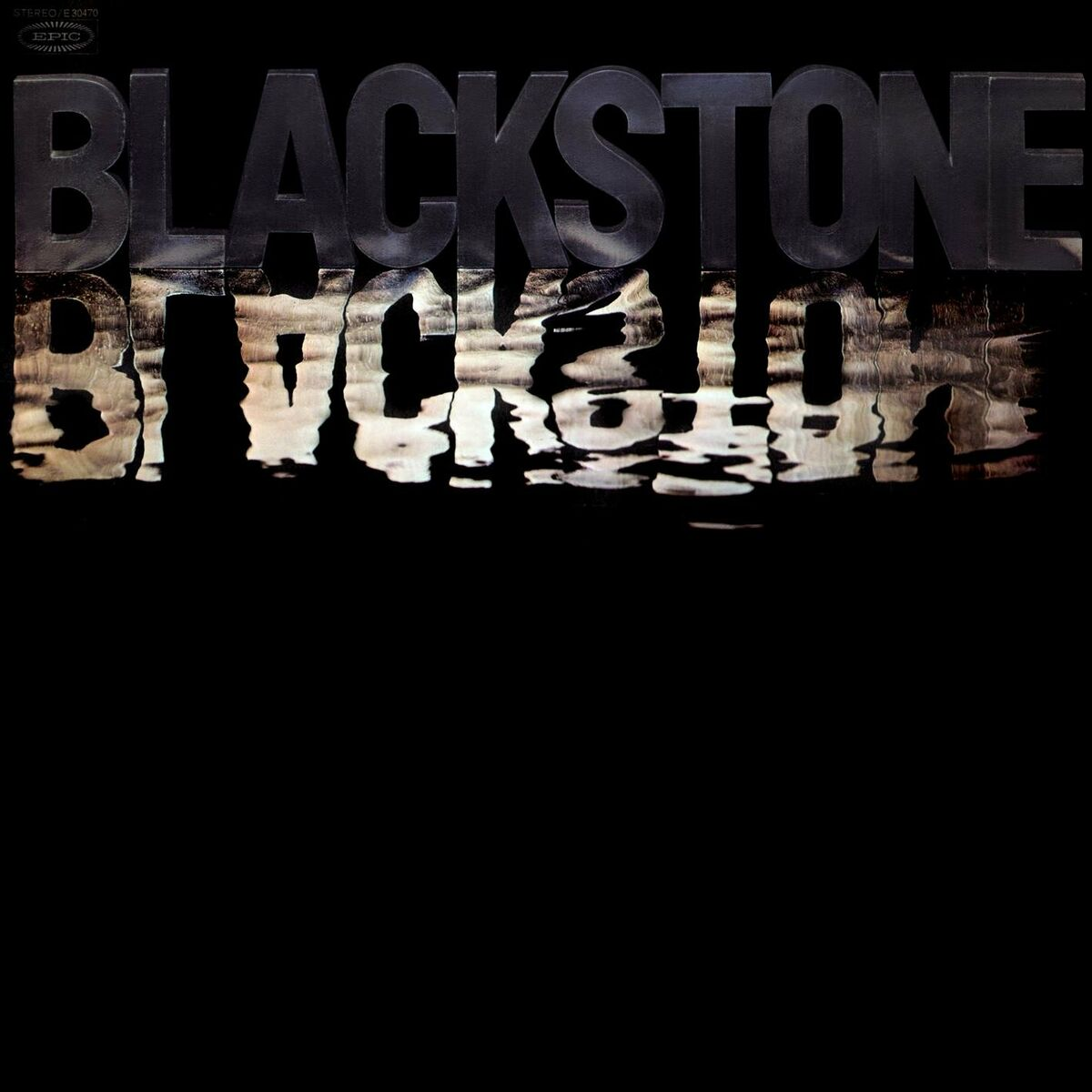
When Conan O'Brien took over The Tonight Show, he brought with him his Late Night band The Max Weinberg 7, rechristened Max Weinberg and The Tonight Show Band. Famously, Max was an erstwhile member of the E Street Band when Conan offered him the job as Late Night bandleader. He stayed loyal to Conan even when The Boss reformed E Street in 1999 and he had to balance his Late Night duties amidst touring. Before Max originally joined Springsteen in the mid-70s, he had played in a few other college and Jersey bands and first recorded his drumming as a member of the short-lived five-piece, Blackstone. The eponymous Blackstone came out in 1971 on Epic Records.
The single "Love, Love, Love" leads off the album with a debt to Led Zeppelin. The scream-singing vocals, dubious lyrics, a clever bass and emphatic drumming are all patterned on the hard rock quartet. The simple guitar and unambitious production are the only elements that aren't. There's an obvious difference in virtuosity as each band member either pales in comparison to or comes close to their musical models. Is it sacrilege to say that the young Max Weinberg nearly gives John Bonham a run for his money? By maximizing every fill, Max claims the song for his own. Only the solo gives away that he's still a click behind Bonham as it doesn't match the creativity of his fills. Of course, the song and the band couldn't just settle for being a less-than Zeppelin dupe, so that's why you add a keyboard (especially if you're also a fan of The Zombies.)
Only about a third of the songs scattered throughout Blackstone owes so much to Zeppelin. The rest of the tracks are a flowery, pop psychedelia dominated by lead singer Tom Flynn. The songs feel dated even though they're only two years removed from the late-sixties they evoke, while also harkening to the dim future of derivative corporate rock. If it's not clear already, the album lacks any identity or style of its own and suffers the unfortunate fate of being so unremarkable to be easily forgettable...except for the drumming.
Here is the discography for Blackstone:
Blackstone
Love, Love, Love (1971 single)
"Thinking" by Blackstone
Max Weinberg Leaves Late Night with Conan O'Brien for the First Time
In 1993, Conan O'Brien took over the chair from David Letterman on Late Night, the show that followed The Tonight Show into the next day. After ten years of building a loyal viewership in the early hours of the weekdays, Conan's new contract set forth a path for him to take over Tonight in 2009 as NBC didn't want to lose him to another network. When it came time for the hosting transition, NBC couldn't lose Leno to another network either because of their contract with him. So, they programmed Leno a primetime slot leading into the local news before then airing The Tonight Show with Conan O'Brien.
Unlike Leno, Conan never really did stand up. He was President of the Harvard Lampoon, wrote for SNL and wrote some of the best and most iconic Simpsons episodes. From that and a fateful audition, Conan replaced David Letterman on Late Night as a complete unknown. He had never held such a large stage for a captive audience, but coworkers and friends said that he would captivate any writers' room he was in. Conan quickly proved to be a natural on stage. His show had more in common with the "anything goes that gets laughs" antics of Steve Allen and thus was a more anarchic version of Late Night than Letterman's wry subversion or Leno's workman-like production on The Tonight Show.
The abysmal ratings of Leno's new show caused an uproar amongst the local affiliates, and the slow start to Conan's ratings gave NBC executives an out. They had the host who was a guaranteed #1 in the late night ratings still on the payroll and wanted to dump two underperforming shows begat from their contractual snafus. The proposed solution was to shift the time slots. The Jay Leno Show, which had started at 2200 EST would now start after the news at 2335...the traditional starting time for The Tonight Show. The Tonight Show would then be pushed later and begin airing after midnight. Conan could either accept the changes or be forced out. (As previously hinted, Dick Cavett wrote a blog entry on the debacle and didn't side with either host but rather criticized the boneheaded contracts NBC drew up and wondered at the "wisdom" of writing Leno's planned departure while he was still at the peak of his popularity.)
Conan O'Brien exited NBC and his contract for a large but undisclosed sum. In the settlement, he could not appear on television, radio or the internet for six months after leaving The Tonight Show. So, Conan went on a grievance tour, or rather a concert tour, named The Legally Prohibited from Being Funny on Television Tour with the proceeds going to his laid off crew while he looked for a new home on television. With members of his erstwhileTonight Show Band and some loyal staff, Conan performed over 40 shows across the United States playing music and comedy to sellout crowds. The tour was chronicled in the documentary Conan O'Brien Can't Stop directed by Rodman Flender. An original soundtrack for the film, Conan O'Brien Can't Stop, was released in 2011 on Lakeshore Records.
The album is a curated set list of the best songs Conan performed on the Tour. Even without the visuals, the audio is clear evidence that Conan gives the audience everything he has. The energy never falters but the exhaustion becomes audible, and banter about needing to go to the hospital by the end of a concert comes off as only half joking. Conan plays guitar and sings better than you'd expect, but it's the clever set list and The Legally Prohibited Band that helps Conan pull off the variety show concert. A learned sense for what the audience will respond to makes a playlist of rockabilly and Americana classics and allows Conan to go between impersonation, at times channeling Elvis, Chuck Berry or The Big Bopper, and his own pure energy (with a dash of Allan Sherman.)
Unfortunately, the album is just the concert's songs. It's a missed opportunity that the record is simply a soundtrack and not a live album that includes the monologues, guest artists and encores (and the Live at Third Man record is not that.) Part of what made the tour so popular and necessary was that the concert experience (monologue and skits included) allowed Conan to further air his grievances to an audience all too willing to support him and revel in a shared spite towards television executives. The Band's beloved "The Weight" is the album's centerpiece. It's a chance for Conan to take a little break during the concert and highlight the talents of his band, and although Conan would never allow it, voices the audience's desire to take some of that weight themselves from off of his shoulders.
Conan O'Brien Can't Stop is fun and engaging but probably more memorable as a live experience. As an intermission to his TV career, it is further proof that Conan has the talent and inspiration to be a great entertainer and a great comedian in any medium, and it couldn't be more apparent that, in another time, he would've made a decent disc jockey turned regional rockabilly artist.
Here is the discography surrounding Conan O'Brien's debut album:
And They Call Me Mad? (2010 single)
Conan O'Brien Can't Stop
Live at Third Man (2011 live album)
"The Weight" by Conan O'Brien and The Legally Prohibited Band
"And They Call Me Mad?" by Conan O'Brien
Late Night's All Kids Audience Show
Andy's Little Sister Stacy
Conan's Last Tonight Show Monologue
Conan Interviews Steve Allen
Conan & John Mayer Sing a Lullaby
Guest David Letterman on Late Night
David Letterman on Jay Leno and Conan O'Brien
Conan O'Brien on The Late Show with David Letterman
After three years, Branford Marsalis quit as Tonight Show bandleader partially due to frustration with the non-musical expectations that went with the job: forced repartee, requisite laughter at unfunny jokes, and host ass-kissing (as he put it.) Kevin Eubanks, guitarist with the band since Leno's start and composer of its closing theme "Kevin's Country," got the promotion to bandleader in 1995. He was more comfortable in the role than his predecessor and had better chemistry with Leno. As bandleader, he was also more attune to the attentions and expectations of the audience. Branford wasn't as amenable to the audience nor to the brass. His exit, then Eubanks's literal "swearing in"—a skit which hit upon tardiness, non-responsiveness to jokes, and the playing of obscure music—inadvertently revealed the rough dynamic Kevin had to follow.
Kevin and Branford had previously toured with the Grateful Dead as Branford Marsalis and The X-Men. Drummer Jeff "Tain" Watts and bassist Robert Hurst III rounded out the quartet and, with Kevin, supposedly pushed Branford into taking the Tonight Show job after his initial refusal. Both bandleaders go even further back to the near-beginning of their careers. Kevin (and his brother Robin) played alongside Wynton and Branford as members of Art Blakey and The Jazz Messengers. They toured Europe with Blakey in 1980 and set the experience to wax on the album Live at Montreux and Northsea. Kevin played with other luminaries (Roy Haynes, Dave Holland, etc.) in New York City before releasing his debut album Guitarist in 1983 on the sub-label Elektra Musician.
Like Fathers & Sons, Guitarist is a family affair. Kevin is joined sporadically by his brother Robin (trombone) and his cousins David (guitar, bass, the only other musician to play on all eight tracks) and Charles (piano.) And although Kevin had gotten his start with straight-ahead jazz, he seems more amenable than the Marsalis family to fusion as he plays the electric guitar on most of the album's tracks. The style of the music still follows along straight-ahead expectations, but does incorporate a bit of funk on Side B opener "Urban Heat." The album opens and closes with the spotlight on Kevin accompanied only by veteran David Eubanks playing rhythm guitar on the Spanish-inspired "The Novice Bounce" and bass on the Kind of Blue track "Blue in Green."
As the guitarist goes, so goes Guitarist, and neither take you very far. As much as Kevin shows his technique on the opener, his solos can be frustrating. On "Inner-Vision," he plays from thought to thought without variety or story, and the following track "Yesterdays," has Kevin playing a solo that sounds out-of-step, bloated and monotonous in an arrangement that just as readily befuddles. The Side A closer, Thelonious Monk's "Evidence" starts faithfully with the guitar in the Monk role, before this version drops the concept of the composition for a bouncy middle section of generic solos and a very sickly sounding trombone/bass combo at its heart. Only veteran drummer Roy Haynes (playing on just this track,) who recorded the song with Monk in 1958, seems to know how to bring out the song's immediacy, humor and eclectic joy.
Side B recharges the album with the aforementioned, breakneck "Urban Heat" before channeling Wes Montgomery in another Eubanks/Eubanks duet for guitar and bass, which starts devotedly and ends simplistically. "Untitled Shapes" is the last Kevin Eubanks composition on the record and his best one. His performance is vibrant, inventive and directional and the rest of the rhythm section takes that clarity and, for a first in any of the ensemble arrangements, can creatively react and support the titular guitarist. Kevin passes the solo to his cousin Charles on piano. Charles Eubanks plays a brightness and spontaneity into the track that makes you wish he could do the same for the rest of the album. You just wish Kevin knew how to end a song; this one, like many of the other originals, repeats itself one too many times before petering out into the closer where it's just Kevin again—a young guitarist.
Here is the discography surrounding Kevin Eubanks's debut album:
Guitarist
"Urban Heat" by Kevin Eubanks
"Alfie" by Kevin Eubanks on The Tonight Show with Jay Leno